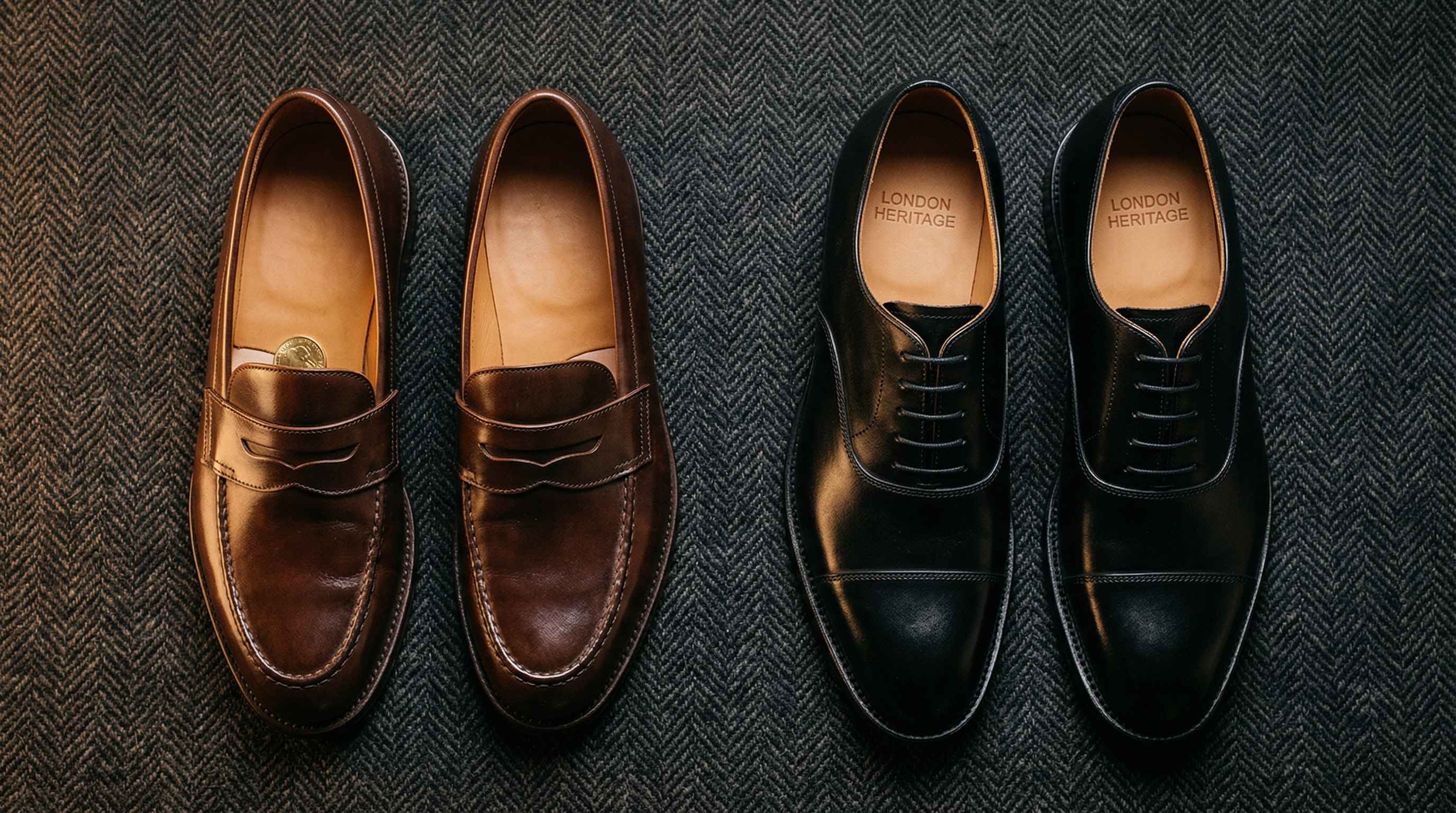
Loafers vs Oxfords is not just about taste. It is about dress code, occasion, and visual message. If you are building a timeless wardrobe, you need both—just for different use cases.
In this guide, you will learn:
- the exact difference between loafers and oxfords,
- when each shoe is appropriate,
- which colors and materials give the most versatility,
- and how to avoid common formality mistakes.
Loafers vs Oxfords: What is the key difference?
The key difference is in the construction:
- Oxford: closed lacing, cleaner lines, higher formality.
- Loafer: slip-on design, softer appearance, more ease.
If you only remember one rule:
Oxfords read formal, loafers read relaxed.
The Oxford: Precision, structure, formality
The Oxford is the classic business and occasion shoe. Its closed-lace construction creates a neat, disciplined silhouette and a more formal finish.
When to wear oxfords
- Business formal (suit + shirt + optional tie)
- Weddings and formal celebrations
- Evening events with elevated dress codes
- Job interviews and conservative office settings
Best oxford colors for a capsule wardrobe
- Black — most formal, ideal with charcoal, navy, and black tailoring.
- Dark brown — versatile for business and refined daytime looks.
The loafer: Ease, comfort, versatility
The loafer represents the effortless side of classic menswear. It still looks polished, but with less rigidity than an oxford.
When to wear loafers
- Smart casual and business casual
- Travel and weekend looks
- Warm-weather outfits with lighter fabrics
- Elevated outfits without tie requirements
Popular loafer types
- Penny loafer: the most universal classic.
- Horsebit loafer: slightly bolder and more fashion-forward.
- Suede loafer: especially strong in spring and summer.
Dress code check: Loafers or oxfords?
Business meeting with a conservative client
➡️ Oxford (preferably black or dark brown, well polished)
Smart dinner in the city
➡️ Loafer (smooth leather or dark suede)
Wedding with a classic suit
➡️ Usually Oxford; loafers only if the dress code is explicitly relaxed
Daytime summer event
➡️ Loafer is usually the stronger choice
Styling tips: How to make both shoes look premium
- Keep trouser length clean: slight or no break for a sharp line.
- Match material to season: smooth leather for formality, suede for relaxed looks.
- Coordinate your belt color: not identical, but close in tone and finish.
- Prioritize care: a well-kept shoe always beats a neglected expensive pair.
Common mistakes with loafers and oxfords
- Wearing oxfords with overly sporty pieces
- Forcing loafers into strict formal evening settings
- Poor sock choices (visible athletic socks kill elegance)
- Ignoring shoe maintenance on quality leather
Which shoes should you buy first?
If you are just starting out:
- Dark brown oxford (business + formal occasions)
- Dark brown penny loafer (daily wear + smart casual)
This two-pair strategy covers most real-world situations with consistent style.
For related guides on classic combinations:
Final verdict: Loafers vs oxfords
A well-dressed man does not choose loafers or oxfords forever. He chooses loafers and oxfords based on context.
Oxfords bring formal authority. Loafers bring relaxed elegance. Together, they form the foundation of a timeless shoe wardrobe.